
Dressmaker is set in the fictional town of Twillford, in a deliberately non-specific vintage era. What the game and its developers actually confirm.
Where Does the Dressmaker Take Place?
Quick answer: Dressmaker takes place in Twillford, a fictional town, inside a dressmaker's shop. The era is deliberately non-specific: the developers describe "a vintage feel" rather than a year, and the cast mixes Victorian-coded and 1940s-coded clients. No real country, city or decade is named in the game or on Steam.
The shop looks period-accurate — wallpaper, fittings, fabric bolts, a hand-cranked machine — but the ambiguity is deliberate. The setting is a stage for clients, not a place you travel through.
- The town is Twillford, named in in-game dialogue
- Steam and Wikipedia do not name the town or a country
- The developers call the setting "not era-specific"
- The shop is the hub; you do not travel between districts
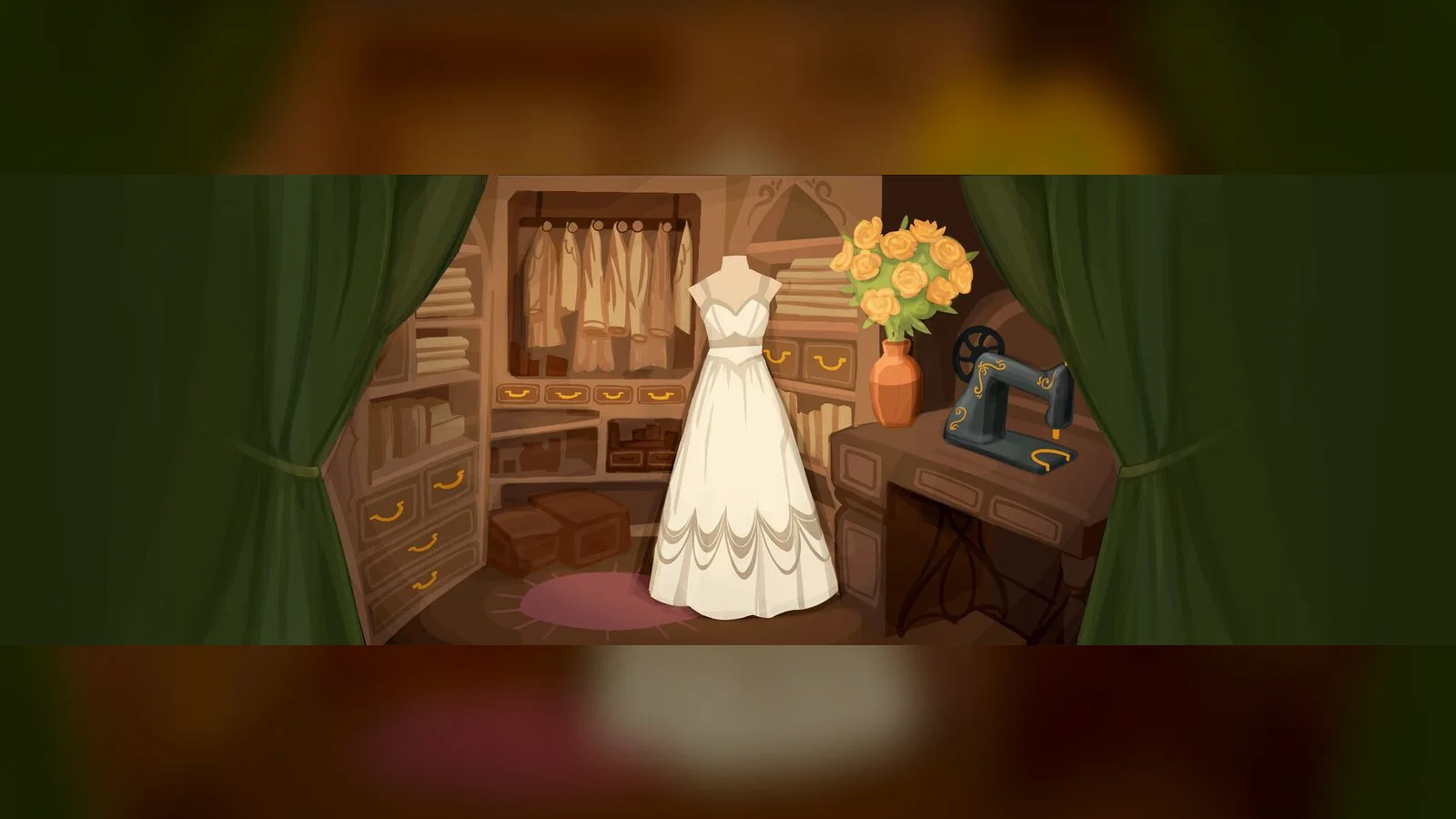
The short answer: Twillford
Twillford is the name that appears in the game's own dialogue. In a scene shared on r/cozygames, Prudence says she "called upon the services of the Twillford glazier", which puts the shop in a town with tradespeople, not an isolated cottage. Fan wikis also list Twillford as the setting.
Official material is quieter: Steam says "a whole town" without naming it, and Wikipedia describes a shop sim without a location. Twillford is the best-supported name, not a label the store page uses.
There is no Twillford on any real map that matches the game. Treat tourism-style questions ("which country is Twillford in?") as unanswered rather than hidden lore.
The era is deliberately vague
Sabrina Becker, the real dressmaker who designed the characters, told The Guardian that Dressmaker "isn't era-specific, so as not to limit players". She described the target as "the sort of era where you would have actually gone to a dressmaker to have a dress made", with "a vintage feel" rather than a fixed year.
The cast shows the result. Prudence is Victorian-coded: high collar, leg-of-mutton sleeves, a hat built like a small garden. Rose is 1940s-coded. They share a shop, a fabric supplier and a client list without anyone remarking that one of them is dressed sixty years out of date.
That is the brief, not a history error: a fixed decade would force the game to police hemlines and fabrics, while a vague one lets ball gowns, day dresses and office wear share a catalogue.
The places you actually see
You work in one atelier, and the camera stays close to the table and fitting room. The wider town arrives through clients and supply trips.
| Location | What happens there | How you see it |
|---|---|---|
| Your atelier | Measuring, cutting, sewing, fitting | The main hub, where every commission starts |
| Fitting room | Client reactions and story scenes | A corner of the shop, not a separate map |
| The International Emporium | Buying fabric and accessories | A shop interior with bolts and a counter |
| Town events | Spring Fete and other occasions | Referenced on cards, not explorable districts |
The Emporium is the clearest look at the wider world: shelves of silk, cotton and velvet, a counter and a shopkeeper. You never walk the streets, but it implies a town rich enough for a specialist fabric trade.
Is it England? Is it London?
Nothing official says so. The town name sounds English, the architecture reads Victorian, and the class markers — a duke's mansion, evening balls, a glazier — fit a British setting. The game was developed by a South African studio, Free Lives, but that says nothing about where the fiction is set.
The safer reading is "Victorian-ish, not Victorian": the game borrowed the visual language without committing to its geography. Think storybook market town, filtered through 1940s costume drama.
Why the setting works
A named year would invite fact-checking; a vague one keeps the focus on the client in front of you. The shop is a stage, the town is off-screen, and the story arrives through briefs and fittings.
That matches the game's length: roughly 35 hours of commissions across 150+ pieces needs variety more than a map.
The result is a setting that feels bigger than its geometry. You remember the shop, the Emporium and the clients, not a fast-travel menu.
FAQ
What town is Dressmaker set in?
Twillford, according to in-game dialogue and fan wikis. The name is not used on the Steam page or Wikipedia.
What country is Dressmaker set in?
No country is named. The visual cues are British and Victorian, but the developers have not confirmed a real location.
What year does Dressmaker take place?
No year is given. The developers describe the setting as "not era-specific" with "a vintage feel", and the cast mixes Victorian and 1940s designs.
Related Guides
- Dressmaker characters: the clients who populate Twillford.
- Dressmaker Steam page: store facts, platforms and price.
- Dressmaker gameplay: the measure-cut-sew loop.
- Dressmaker money guide: how commissions pay.
Sources: Dressmaker on Steam, The Guardian's developer interview, and Wikipedia.